

Gynecologists Near You in Munich - Preventive Care & Holistic Care
Are you looking to have an IUD inserted in Munich but are concerned about potential pain or perhaps had a difficult experience in the past? This is an important topic that should be addressed openly during contraceptive counseling. We take the time to consider your wishes, your medical history, and your personal sensitivity to pain. Together, we will determine which IUD is right for you and discuss which pain management options might be appropriate for the insertion.
Our goal is not to provide a one-size-fits-all solution, but rather to help you make an informed, medically sound decision. If you would like to compare different methods first, you can find an overview of hormonal and non-hormonal options in our contraceptive counseling.
What may be important to you with us
Many patients come with the wish to “finally be able to speak in peace.” We are creating the framework for exactly this: a protected conversation, clear processes and an atmosphere in which even sensitive topics can be addressed.
Hormonal IUD
The hormonal IUD releases a progestin locally within the uterus. It is an attractive option for many women who want long-term contraception and prefer a method that does not require daily intake. Depending on the specific product, your periods may change and often become lighter.
Copper IUD
The copper IUD provides hormone-free contraception. It is particularly suitable for women who wish to maintain their natural hormonal cycle. At the same time, some users may experience heavier or more painful periods. Deciding which option is the best fit depends not only on your preference for "with or without hormones," but also on your cycle, any symptoms you may have, and your medical history.
The WHO classifies IUDs as highly effective, long-acting, and reversible contraceptive methods. Which specific IUD is medically appropriate for you should always be discussed on an individual basis.
Your gynaecologist in Munich: Services that suit your everyday life
Pain perception during the insertion of an IUD varies significantly. Some women feel only a brief tug or cramp, while others find the procedure considerably more painful. For this reason, it would be misleading to promise that an IUD insertion is universally "painless."
How the procedure is experienced can depend on factors such as individual anatomy, the cervix, previous births, past experiences, tension, and personal pain tolerance. If you are worried about pain, please feel free to mention this during your initial consultation.
The current AWMF guideline for non-hormonal contraception states that pain medication and local anesthetics can be used to manage discomfort during IUD insertion. We will decide together which approach is appropriate for your specific situation.
It is important to us that your concerns about pain are taken seriously. If you have had difficult gynecological examinations in the past, are very sensitive to pain, or would simply like more control for other reasons, we will discuss this with you in detail before the procedure.
IUD insertion under anesthesia in Munich – when is short-term anesthesia a good option?
Wer gezielt nach „Spirale unter Narkose München“ sucht, möchte häufig vermeiden, die eigentliche Einlage bewusst und schmerzhaft zu erleben. Eine Kurznarkose kann in ausgewählten Situationen eine Option sein. Sie ist jedoch nicht automatisch für jede Patientin notwendig oder sinnvoll.
Ob eine Kurznarkose medizinisch infrage kommt, hängt von Ihrer gesundheitlichen Situation, Ihrer Vorgeschichte, dem individuellen Risiko und dem geplanten Behandlungssetting ab. Auch organisatorisch muss geklärt sein, ob eine anästhesiologische Betreuung möglich ist. Deshalb gehört vor einer solchen Entscheidung immer ein persönliches Gespräch.
Wenn Sie eine Einlage unter Kurznarkose wünschen, sprechen Sie diesen Wunsch bereits bei der Terminvereinbarung oder im Beratungsgespräch an. So kann geklärt werden, ob diese Option für Sie passend und verfügbar ist oder ob eine andere Form der Schmerzlinderung ausreicht.
Painless IUD insertion under short-term anesthesia – what is realistic?
The phrase "painless IUD insertion under short-term anesthesia" sets a clear expectation: to feel as little as possible during the procedure. With appropriate short-term anesthesia, you will not be consciously aware of the insertion. However, it is important not to promise complete painlessness, as temporary cramping or spotting can occur after the procedure.
Therefore, the better medical goal is to make the insertion as comfortable, predictable, and anxiety-free as possible. Depending on the situation, this can be achieved through calm communication, local anesthesia, tailored pain medication, or—if individually appropriate and available—short-term anesthesia.
What is the typical process for an IUD insertion?
The exact procedure depends on the chosen IUD, your medical history, and your individual health situation. Typically, it includes the following steps:
Consultation:
We discuss your contraceptive needs, your cycle, any pre-existing conditions, previous experiences, and the differences between hormonal and copper IUDs.
Suitability assessment:
Before an IUD is inserted, we check for any individual contraindications. Depending on the situation, further examinations or an infection screening may be advisable.
Pain management:
We talk about your past experiences with medical examinations and which form of pain relief is right for you.
Insertion:
The IUD is inserted into the uterus through the cervix. The actual procedure usually takes only a few minutes.
Aftercare:
You will receive information on what symptoms are expected after the insertion and when you should seek medical follow-up.
After the insertion, you may experience temporary discomfort similar to menstrual cramps. If pain is severe, increases, or persists, it should be evaluated by a doctor. The same applies to fever, unusual discharge, very heavy bleeding, or suspected pregnancy.
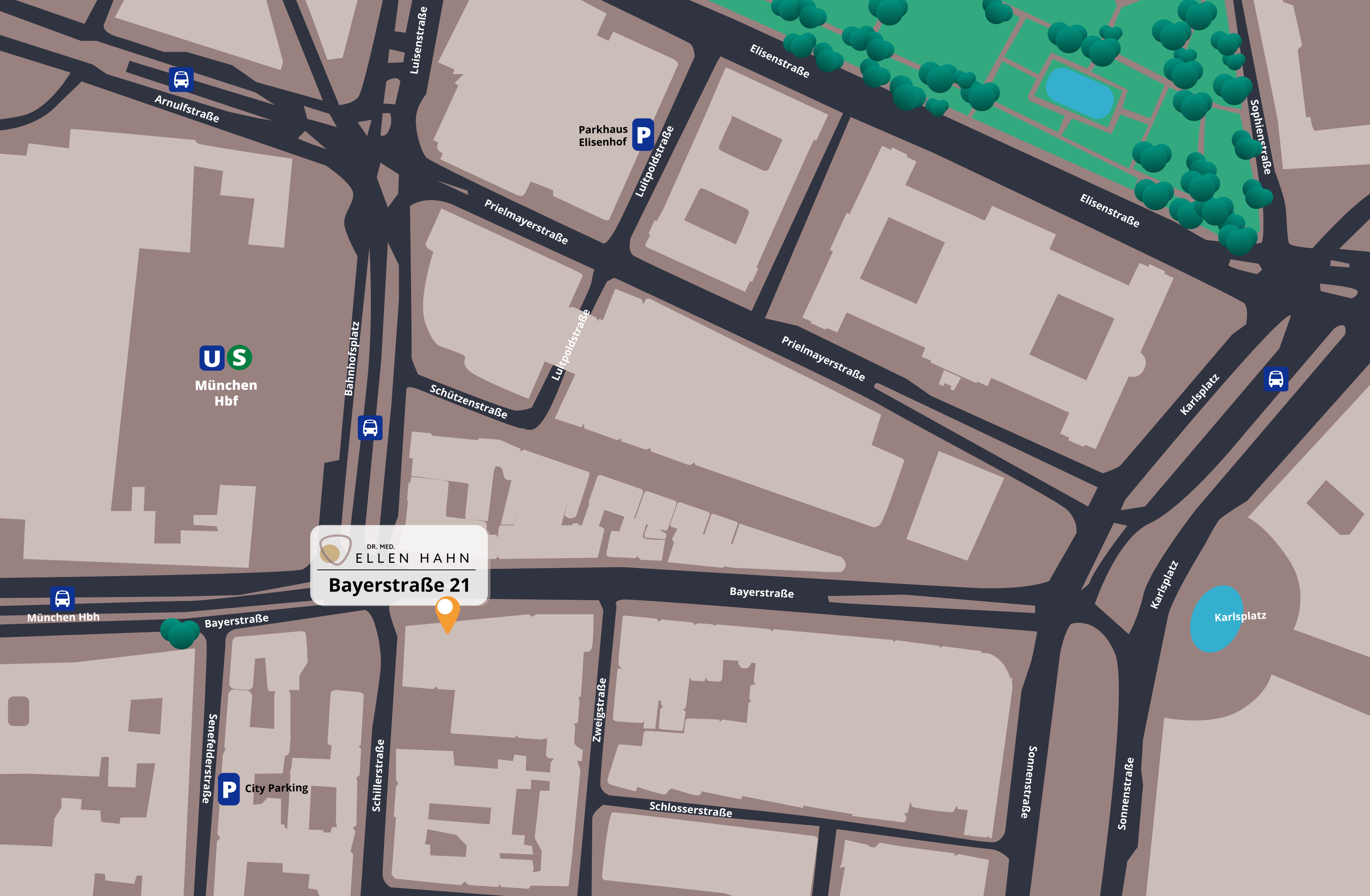
The insertion takes place at the state-of-the-art IsarAOP center at Sonnenstraße 29 in the heart of Munich—centrally located between Stachus and Sendlinger Tor and easily accessible by public transport. Our experienced and well-coordinated team follows standardized procedures to ensure safe and personal care before, during, and after the procedure. The IsarAOP center features nine modern operating rooms and performs more than 10,000 procedures annually.
Further information on the process can be found in the IsarAOP center information flyer. We have also compiled instructions on preparation and appointment scheduling in a separate information sheet for you.
Precaution: Create security before anything happens
Prevention is not a mandatory program — it is a tool for identifying at an early stage what is quietly developing. At the same time, it shouldn't feel like stress. That is why we rely on a calm, clear structure: We clarify what is pending, what makes sense and what questions you have. Preventive care often involves:
Die Hormonspirale gibt lokal ein Gestagen ab. Dadurch kann die Monatsblutung mit der Zeit schwächer werden oder sogar vollständig ausbleiben. Die Kupferspirale kommt hingegen ohne Hormone aus. Bei ihr besteht allerdings die Möglichkeit, dass die Monatsblutung stärker ausfällt oder mit stärkeren Regelschmerzen verbunden ist.
Welche Spirale für Sie infrage kommt, hängt von Ihren persönlichen Wünschen, bestehenden Beschwerden und den medizinischen Voraussetzungen ab. Wichtig ist dabei nicht nur die gewünschte Verhütungswirkung, sondern auch, welche möglichen Nebenwirkungen und Blutungsveränderungen für Sie akzeptabel sind.
Eine individuelle gynäkologische Beratung hilft dabei, beide Methoden abzuwägen und mögliche medizinische Gründe zu berücksichtigen, die für oder gegen das jeweilige Modell sprechen.
Entscheidend ist, welche Wirkung, mögliche Nebenwirkungen und Blutungsveränderungen zu Ihnen passen und ob medizinische Gründe für oder gegen ein bestimmtes Modell sprechen.